
CFCC (China Future Creative Class) began in 2013. Its first educational programme took place in July 2014 at Harvard University as an innovation and entrepreneurship competition. In 2017, CFCC Cambridge Academy was founded at St John’s Innovation Centre in Cambridge, UK.
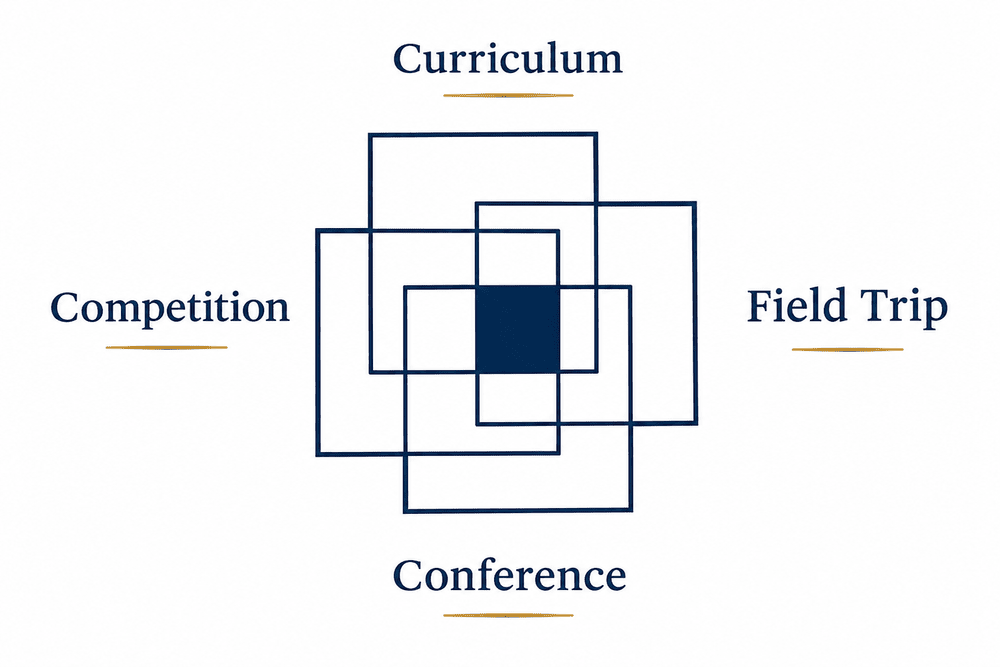
Building on its early international study programmes and competitions, CFCC went on to organise learning and exchange programmes in Cambridge and at Stanford University, Harvard University and the University of Southern California. These experiences shaped CFCC’s educational model, which brings together Curriculum, Field Trips, Competitions and Conferences. CFCC has since extended its approach to learning through real-world problems across disciplines and degree programmes, bringing education, research and innovation into closer contact.
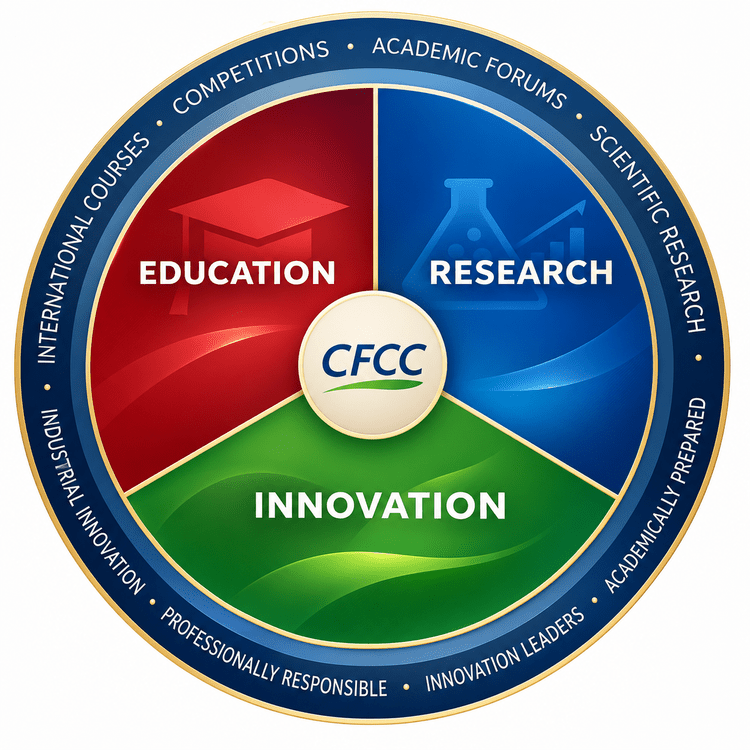
CFCC aims to explore new models of education and build a knowledge hub for the future of learning. Through laboratories, research institutes and innovation centres, we bring together three activities that reinforce one another.
- Education | Learning through knowledge. We build a learning community that spans disciplines, degree programmes and cultures. Our aim is to nurture a global creative class with an international outlook, independent judgement and a sense of social responsibility, capable of using knowledge and creativity to help shape the future of society.
- Research | Creating knowledge. We bring researchers from different disciplines together to address real questions in education, the economy and society. Through theoretical inquiry and empirical research, we pose new questions, develop new explanations and refine the methods we use to investigate them.
- Innovation | Incubating knowledge. We bring promising ideas and research findings into real-world settings. Through prototyping, testing and refinement, we explore how they can become practical technologies, products and services or help address social challenges.
CFCC is committed to the residential college and mentorship systems, dedicated to solving real-world problems.
A collegiate model of learning. Students from different disciplines and degree programmes learn together through shared readings, seminars, fieldwork and team projects. They bring their own methods to a common problem, learn how others approach it and deepen their understanding of their own fields.
Sustained mentorship. Mentors guide students from the choice of a topic through to the presentation of their work. Through regular dialogue and feedback, students clarify their goals, formulate their own research questions and use evidence from reading, fieldwork and practice to test their assumptions and support their conclusions.
Learning through real-world problems. Courses introduce theories and methods. Field trips help students understand needs in context, and competitions give teams a setting in which to test their proposals under practical constraints. At conferences, students discuss their work with researchers, entrepreneurs and peers and refine it in response to feedback. Questions that emerge in practice can inform future teaching and research or become the starting point for a new project.